Artist Spotlight: Ebba Johnson
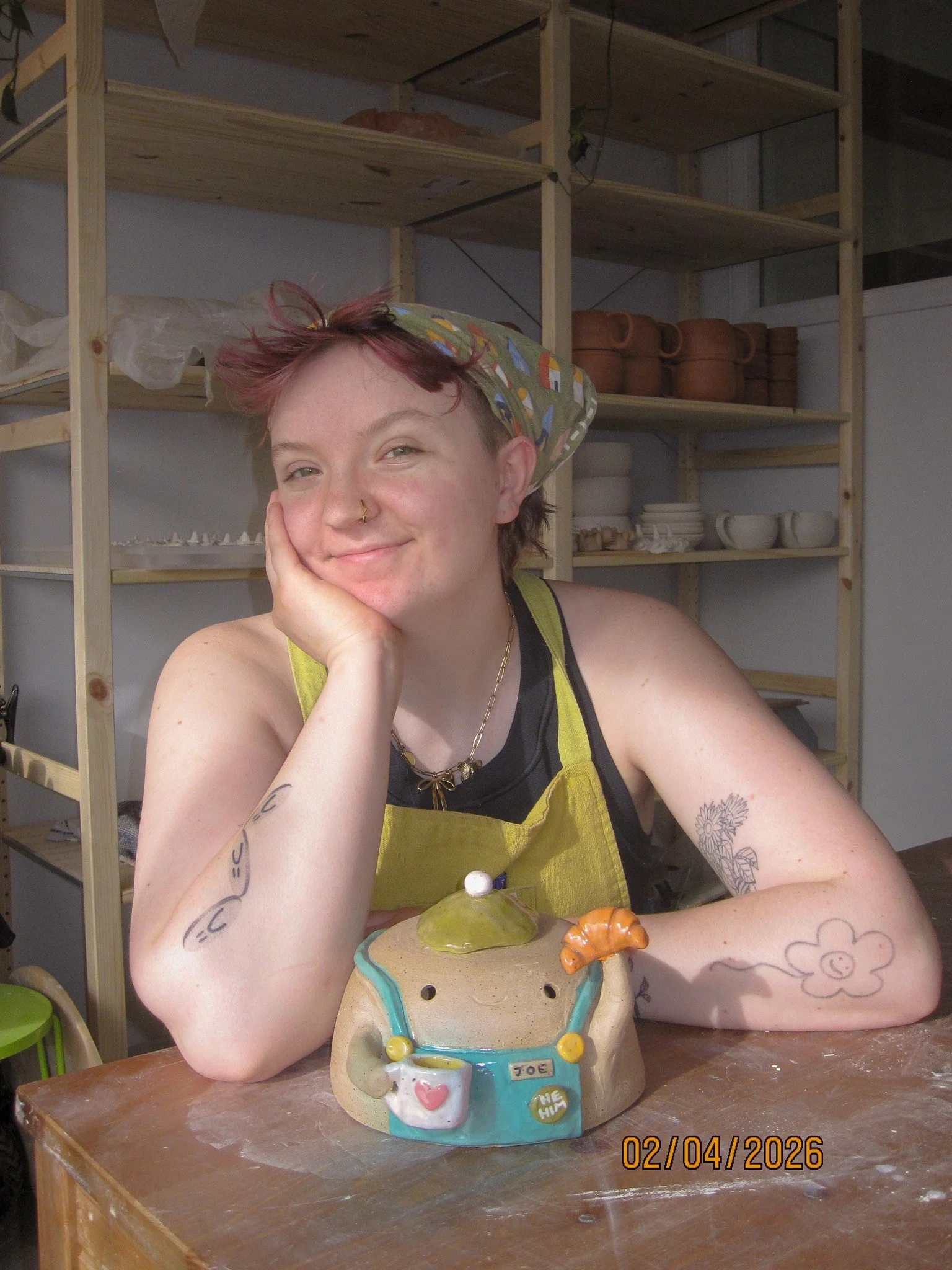
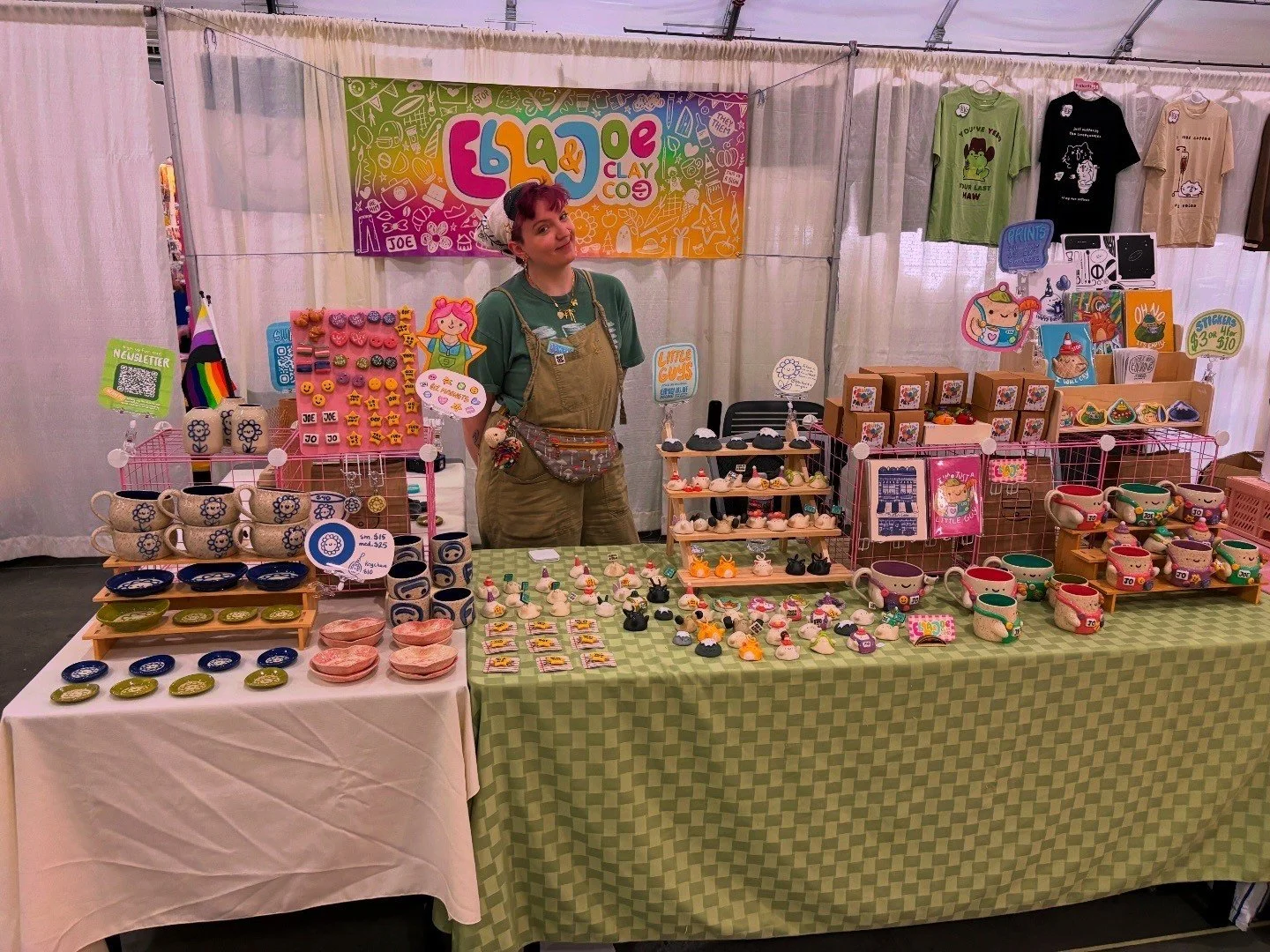
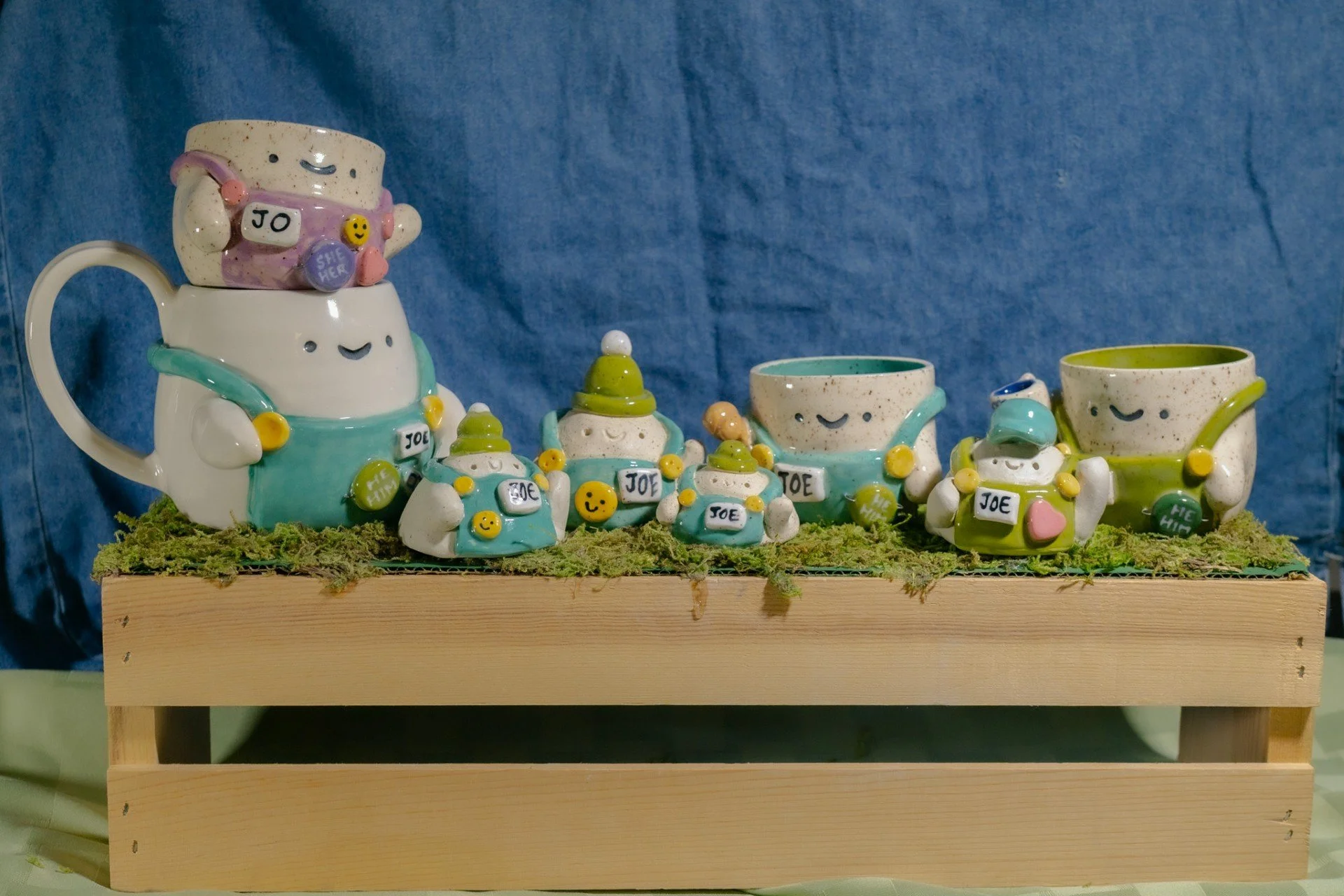
During COVID, ceramicist Ebba Johnson (Ebba & Joe Clay Co) suddenly had time to do nothing but paint, collage, and draw. As art took over their life, they realized: if they were going to invest in a college degree, why not study something they truly cared about? So, Ebba enrolled in an art program at California Lutheran University and took their first ceramics class in 2021, where it was love at first sight.
“Working with clay was the first time I felt like I could express a thought or idea through a medium that felt uniquely mine,” Ebba says. In the past, they felt they had mostly been emulating other artists’ styles, while clay felt truly authentic to them. Ebba quickly immersed themselves in the medium, taking every ceramics class available and experimenting with color, pattern, and form. “I remember thinking, this is the most interesting thing I’ve ever done in my entire life."
Their first opportunity to sell work came through a show organized by the school’s Entrepreneur Club. It was so successful that Ebba realized art could be a legitimate source of income. Soon after graduating, they moved back to the Eastside with hundreds of ceramic pieces in tow, discovering that transporting pottery is no easy feat. They began searching for studio space while adjusting to working in a new state, where even the materials were different. Washington sells different clay bodies and glaze brands than the ones Ebba learned with in California, which meant navigating a learning curve.
Growing up on the Eastside, Ebba always felt the presence of the tech industry. It made the idea of becoming a “career artist” feel distant and unrealistic; it wasn’t something they saw represented around them. As a child, Ebba knew they loved art and wanted to pursue it, but creativity was often framed as something you did on the side, not as full-time work. Even today, Ebba has found that artists on the Eastside face more challenges than those in Seattle. There are fewer opportunities to rent studio space across the bridge, and affordability is often a concern. So, when they saw a social media post about space available at the BelRed Arts Studio, they applied on a whim. After being accepted into the space, removing the carpet, and settling in, Ebba finally had room to branch out from their home studio and further develop their practice.
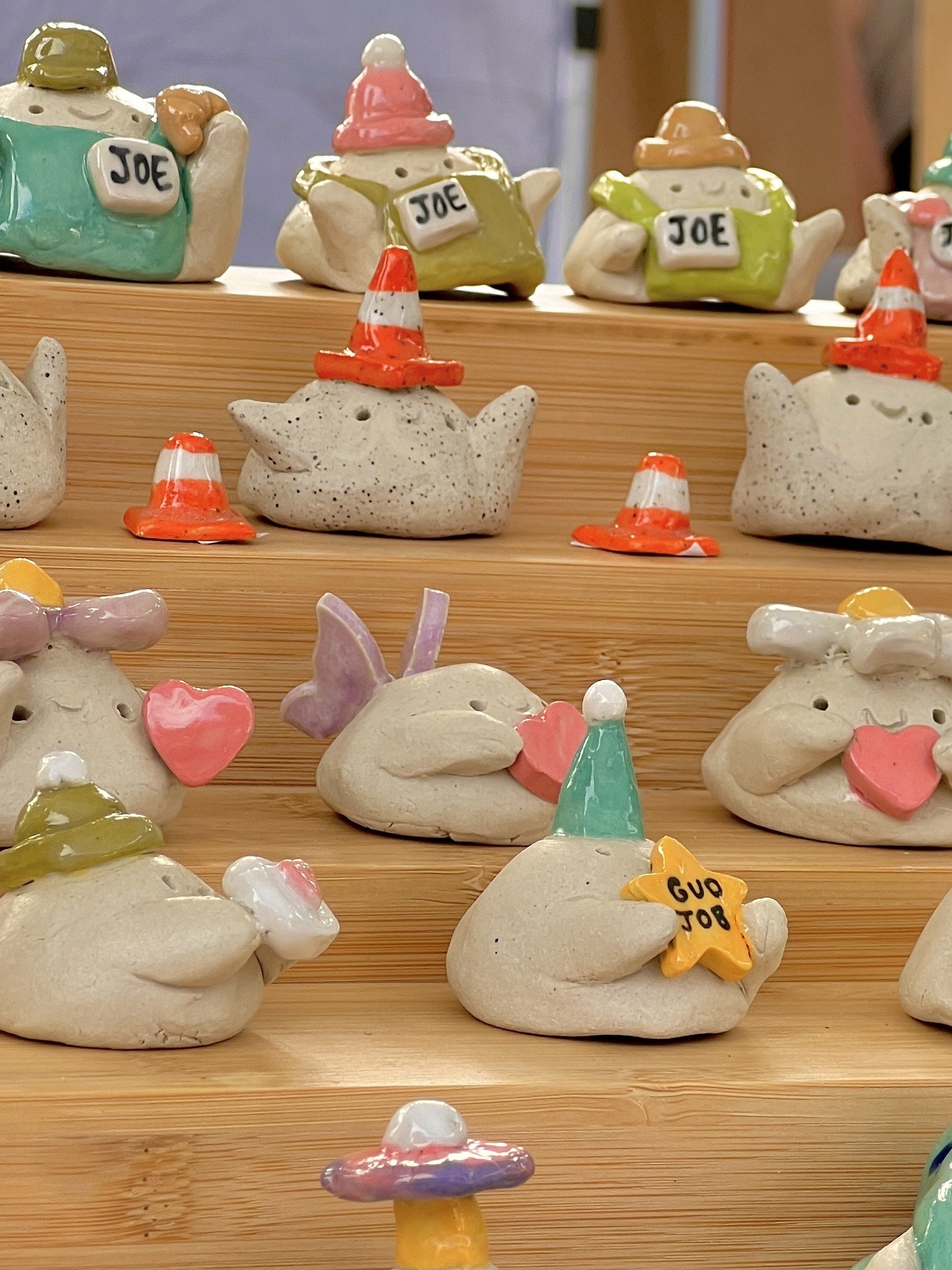
Ebba’s ceramics are charming and instantly recognizable. Their signature character, Joe, is a lovable barista who was born by accident. Ebba had thrown a bowl that came out a little too round. Instead of scrapping it, they flipped it over and began adding details until it became the iconic figure featured in their business, Ebba & Joe Clay Co. The idea was partly inspired by Ebba’s own time working at a coffee shop that enforced a dress code but allowed small personal touches like enamel pins. Now, each character wears tiny pins or accessories that hint at their personality or story.
Over time, Ebba developed a whole world around the character, including a coffee shop called “Jojo’s Coffee,” run by Joe and his wife Jo. The idea was inspired by the countless hours Emma spent working in coffee shops. “Coffee shops are welcoming places,” Ebba says. “There’s a feeling that you’re supposed to be there.”
Ebba regularly draws inspiration like this from daily life. Construction around their workplace led to the creation of traffic cone characters, a playful way to make light of something many people find frustrating. This is what Ebba’s work does — it brings people together through shared experiences. You can’t help but smile when you see one of their characters’ happy little grins. Plus, many of the pieces are functional. Unlike many art forms, pottery has the unique ability to integrate seamlessly into everyday life.
“The reason I make ceramics is that they’re utilitarian and have purpose,” Ebba explains. “You can think it’s beautiful, but you can also drink coffee out of it or eat from it.” But that doesn’t diminish the whimsy. Ebba recognizes that life is made up of small moments, like the first sip of a cup of coffee. “I want the pieces I make to bring a little humor and joy to those everyday experiences.”
Ebba works as a small-batch artist, usually creating 10–20 characters at a time. While there is no such thing as a typical day in the studio, most pieces follow the same process. Each item begins with a small ball of clay. Ebba rolls slabs for details like aprons, then attaches tiny elements like arms, strings, and accessories one by one. Everything dries for at least 24 hours before the first firing, which makes the pieces much more durable. After that, Ebba applies underglaze color, fires them again, and glazes them one final time to make them food-safe and glossy. The process of creating a finished piece can take at least a month.
Despite the long timeline, Ebba finds the work deeply rewarding. “It makes me really happy knowing people have collections of my pieces in their homes,” they say. “People get excited when I announce a new batch, and they love the stories behind the characters.”
Relationships with other artists are also key to Ebba’s practice. They find inspiration in friends like Lacey of Queen Bee Ceramics and Seattle-based artist Stasia Burrington. Working at the BelRed Arts Studio also means being surrounded by artists who understand the ups and downs of creative work. Having that community gives Ebba the chance to talk with others who understand even the most mundane things, like the complexities of filing sales tax as an artist. It also helps them avoid the isolation of working from home. “Here, there’s always someone to talk to, ask for advice, and share frustrations with,” Ebba says.
That sense of community can be harder to find on the Eastside than in Seattle, where artist collectives and studio spaces are more abundant. Still, Ebba believes spaces like the BelRed Arts Studio are a step in the right direction. “It shows that this area isn’t just tech,”they say. “There are artists here too, and it’s their whole life.”
Ebba hopes their work shows that art doesn’t always have to be grand or monumental. It can be as down-to-earth as the mug you reach for every morning or the story of a little guy who works in a coffee shop.